



What Type Of Migraine Do I Have?
- Chronic and Episodic Migraine
- Migraine Aura
- Migraine Without Aura
- Hemiplegic Migraine
- Silent Migraine
- Vestibular Migraine
- Ocular Migraine
- Menstrual Migraine
If you experience migraine, you know how difficult and even debilitating this condition can be. While there are many unknowns in the medical community when it comes to the causes of migraine, medical research has led to some helpful labels we can use to classify different types of migraine.
So, what are the different migraine types? We’ll explain some common varieties, including chronic and episodic migraine, migraine with and without aura, silent migraine, vestibular migraine, ocular migraine and menstrual migraine.
Do you have chronic or episodic migraine?
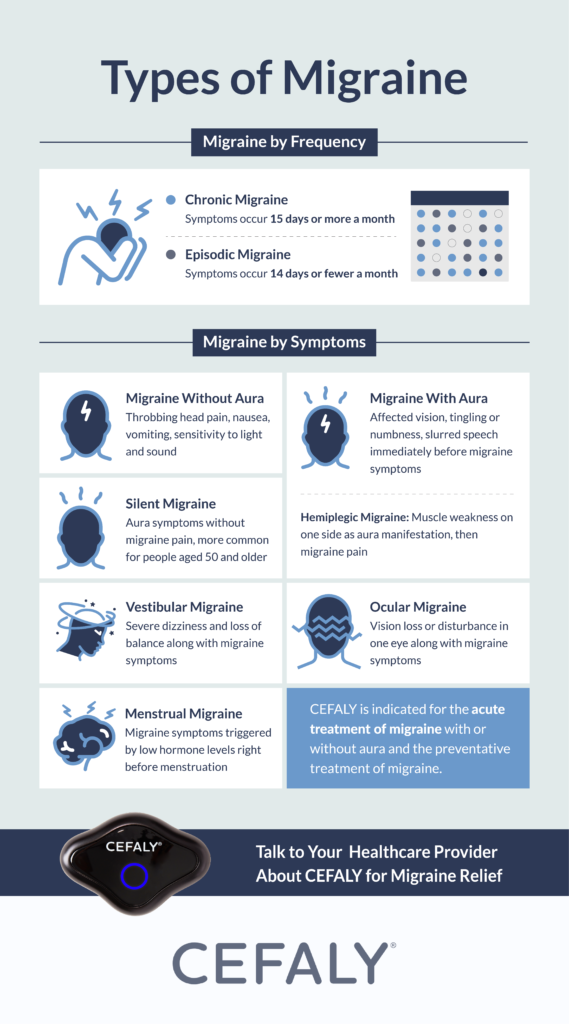
One of the most useful ways to classify migraine is by frequency. There are two main diagnoses to be aware of — chronic and episodic migraine.
How do you know if you have chronic migraine?
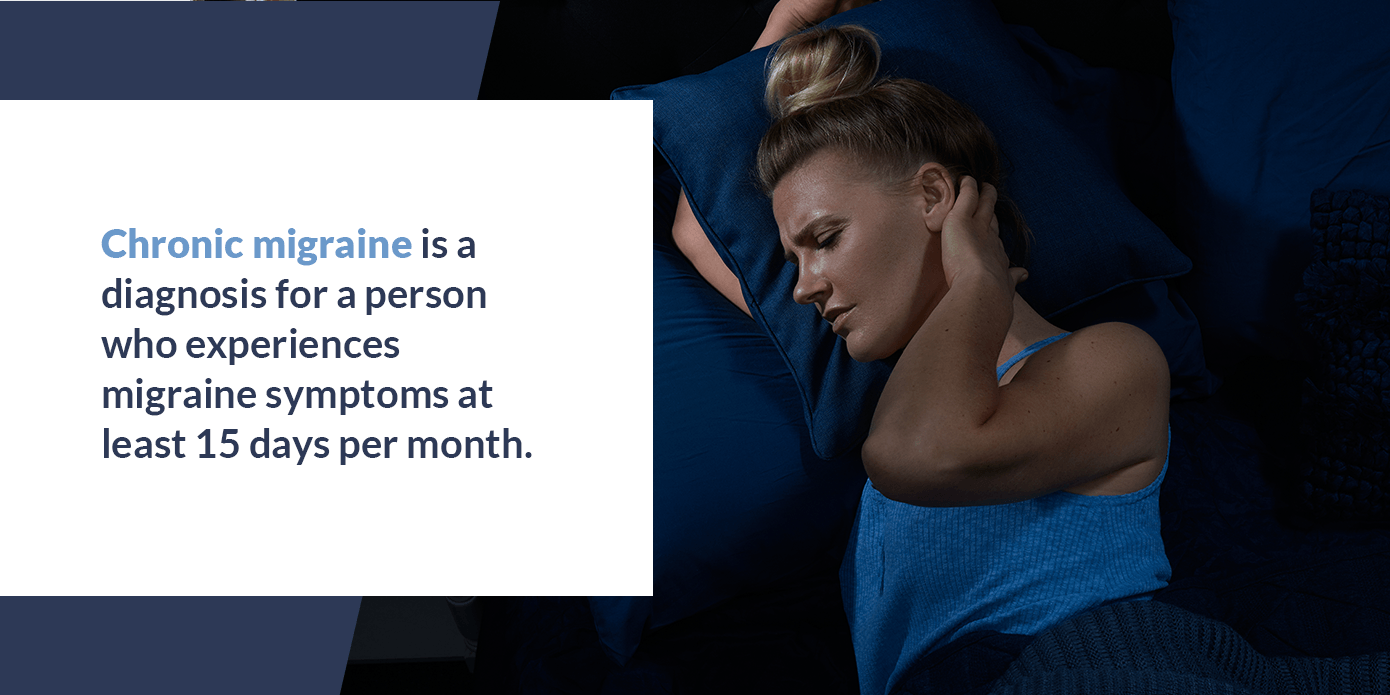
Between 3-5% of Americans have chronic migraine, though some estimates put that percentage a bit lower. Chronic migraine is a diagnosis for a person who experiences at least 15 days per month of migraine symptoms.
In other words, someone with chronic migraine has as many migraine days or more than days they go without migraine symptoms. These are the most severe instances of migraine and often involve migraine that lasts longer in addition to their increased frequency.
While all migraine cases can interfere with a person’s professional and personal life, chronic migraine can be especially debilitating because of their frequency. Chronic migraine treatment options are more likely to focus on prevention compared to treatment plans for less frequent migraine.
What is episodic migraine?
Most people with migraine suffer from what’s known as episodic migraine. A person who has fewer than 10 migraine days per month has low-frequency episodic migraine, and a person who has 10-14 migraine days per month has high-frequency episodic migraine.
Cases of episodic migraine can evolve into chronic migraine — especially with medication overuse. However, in the majority of cases, migraine remains in this episodic category.



Do you have migraine with or without aura?
We can also classify migraine into two major categories depending on a specific kind of symptom — aura. You may have heard these categories referred to as classic, or complicated, migraine and common migraine. Classic or complicated migraine occurs with aura, while common migraine is without aura.
What is migraine aura?
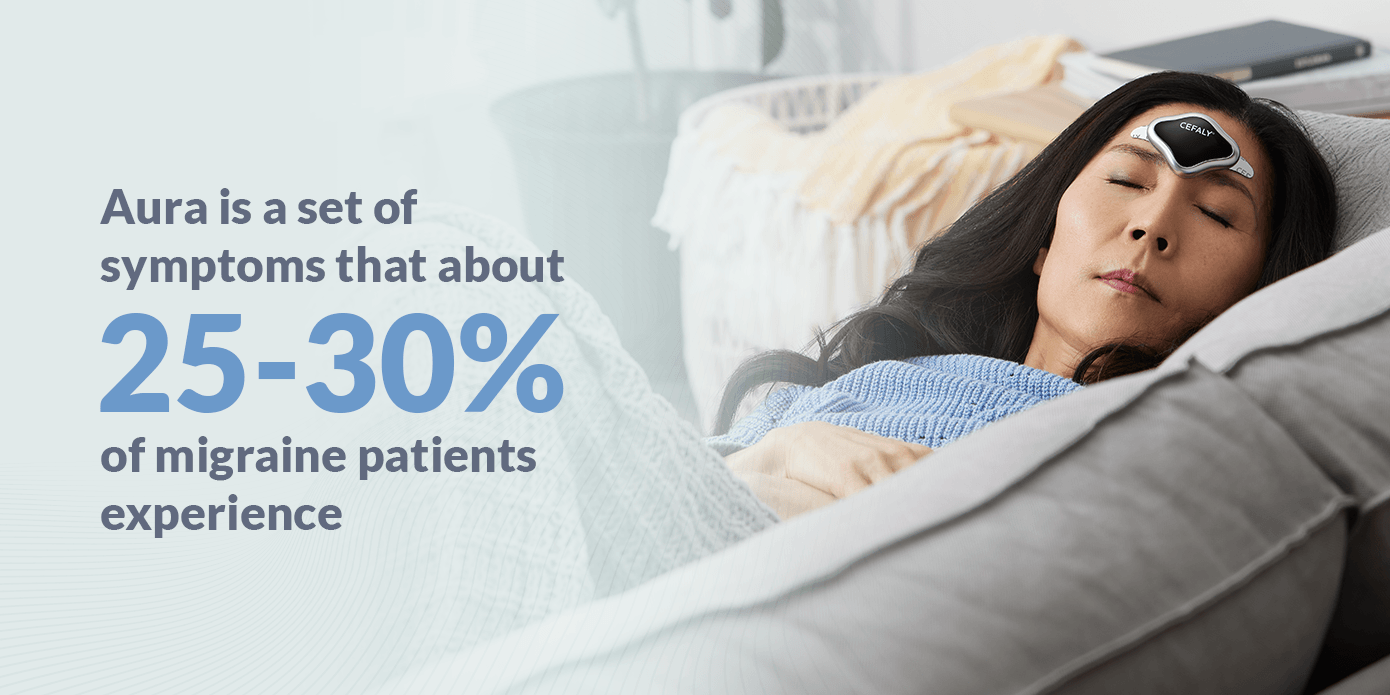
Aura is a set of symptoms that about 25-30% of migraine patients experience. These symptoms tend to immediately precede other migraine symptoms, including head pain, and typically last less than an hour. Aura symptoms can include disturbances related to:
- Vision: The most common aura symptoms are vision-related. A person may start to notice their vision is affected by the appearance of bright or dark spots, flashes, stars or zigzags. They may even lose partial vision temporarily.
- Physical sensation: Aura can also involve tingling or numbness sensations. This can occur on the face, on hands and fingers or on one side of the body. A sensory aura typically starts as a tingling feeling in one arm that travels up and can spread to one side of the face.
- Speech: Another symptom some people experience in the aura stage is interference with their ability to speak. They may have trouble saying the right words or begin to slur their words.
Aura symptoms can be different for different people, so the above symptoms merely represent some of the most common features of this migraine stage. Some people may experience less common sensory disturbances — for example, muscle weakness, ringing in the ears or changes in their sense of smell or taste.
What is a hemiplegic migraine?
Hemiplegic migraine is a rare subtype of migraine with aura. In this type of migraine, aura manifests as one-sided muscle weakness before other migraine symptoms. Because of its similarity to stroke symptoms, you should always call medical professionals to properly diagnose these symptoms.
In addition to one-sided muscle weakness, hemiplegic migraine aura can also include vision, speech and sensory changes. Some hemiplegic migraine seems to be genetically linked, so you may experience this kind of migraine if other members of your family do.
What is a silent migraine?
While aura is typically seen as a precursor to the attack phase of a migraine, some people can experience migraine aura without ever getting a headache. This is most common for people aged 50 and older and is nicknamed a “silent migraine.”
The most common symptom of silent migraine is vision issues. During a silent migraine, people may experience flashing lights, lines or dots and temporary blind spots. They may also experience other aura symptoms like tinnitus, dizziness and tingling. Although silent migraine skips the headache phase, it still may be debilitating.
What is migraine without aura?
Not all migraine attacks include an aura phase — in fact, most do not. Some people experience migraine with aura sometimes but also experience migraine without aura. With a migraine without aura, or common migraine, a person does not necessarily get a warning that their head pain and other migraine symptoms are coming on.
Common symptoms of migraine without aura include:
- Severe headache
- Sensitivity to light and sound
- Nausea and vomiting
After a migraine attack, people often feel fatigued and experience poor concentration and mental health. Both your body and your emotions take time to recover after a migraine attack. It’s very normal to worry about when another attack will occur, especially if you don’t have any warning from aura symptoms.
What is a vestibular migraine?
Your sense of balance comes from your vestibular system. This sensory system tells your brain where you are positioned in relation to your environment and how you’re moving so you can orient and steady yourself. You probably don’t think much about this sensory system unless you experience a problem with it. One way your vestibular system can be compromised is through vestibular migraine.
People can experience problems with their vestibular system separate from migraine. But if you notice you have a vertigo attack at the same time as migraine symptoms like head pain, nausea or sensitivity to light and sound, you’re likely dealing with vestibular migraine.
Vertigo is a swaying or spinning sensation that will make you feel off-balance or dizzy. Vestibular migraine treatment at home may combine migraine pain treatment with measures to combat this dizziness.
What is an ocular migraine?
When the aura stage isn’t present, people can still experience some aura-like symptoms during their migraine attack. For example, with an ocular migraine, you can experience vision disturbances. Ocular migraines may also be referred to as visual, monocular, retinal or ophthalmic migraines since they affect your sense of sight.
This type of migraine may seem similar to migraine with aura, which tend to have vision-related symptoms. The main distinction is that ocular migraines affect only one eye — not both. If you notice flashing lights, dark spots or other abnormalities in your vision in both eyes, then it’s likely a migraine with aura. If one eye is unaffected, however, it’s likely an ocular migraine. Additionally, ocular migraine symptoms mainly consist of vision loss rather than flashing lights or other vision disruptions.
One study found that half of ocular migraine patients experienced complete vision loss in one eye. One in five experienced blurred vision instead. Less common symptoms included incomplete loss of vision, dimming and blind spots. The study also found that more than three-quarters of participants had a headache on the same side as the eye that experienced vision disturbance. Blindness from ocular migraine attacks typically lasts less than an hour. It can occur either before or during a migraine headache.
What is a menstrual migraine?
This kind of migraine is also called a period migraine or hormone headache. During a woman’s cycle, estrogen levels drop right before menses, the start of blood flow. This change in hormone levels can trigger migraine in some people.
Because of its connection to hormone changes, this kind of migraine occurs right before or during a woman’s period. Symptoms can include the following:
- Severe head pain
- Sensitivity to light and sound
- Blurred vision
- Dizziness
- Nausea and vomiting
If your migraine attacks are caused by hormonal changes, you may be able to find relief with hormonal treatments or birth control, as well as other migraine treatments.
Treat migraine pain with CEFALY
No matter what type of migraine you experience, the desire for relief is universal. If medications and home remedies have fallen short, there’s an alternative solution you can try to incorporate into your migraine treatment plan — CEFALY.
CEFALY Connected from CEFALY Technology is clinically proven to help prevent and treat migraine pain by targeting the trigeminal nerve. By sending tiny electrical impulses to this nerve, the CEFALY device can relieve migraine symptoms and prevent future attacks.
CEFALY is cleared by the FDA and is convenient to use in your own home or on the go. Learn more about CEFALY and get yours today!



Latest Posts


“CEFALY Gave Me My Life Back”: Camille’s Search for a Drug-Free Migraine Treatment
Discouraged by her experience with medications, Camille began building a toolkit of non-pharmacologic migraine treatments. Find out what…
What Patients Need to Know About Episodic Migraine vs. Chronic Migraine
While official definitions classify episodic migraine as fewer than 15 headache days per month and chronic migraine as…