




What Is Complex Migraine?
“Complex migraine” is an informal word for a group of migraine types with less common symptom patterns that may resemble a stroke. It’s not an official diagnosis, but rather a catch-all term for these kinds of migraine.
Complex migraine episodes can be just as disruptive as typical migraine attacks, and sometimes more so. Understanding complex migraine can help you address concerns you may be feeling and create an effective migraine management plan.
Types and symptoms of complex migraine
“Complex migraine” can refer to any of several unusual migraine types. If you visit your doctor for diagnosis, they’ll use one of these more specific terms to classify your migraine episodes:
- Atypical migraine: Like “complex migraine,” this is not a formal medical diagnosis. “Atypical migraine” can refer to any migraine episode with an abnormal pattern or symptoms. For example, an atypical migraine may come on suddenly, cause sensory disturbances without a headache or include symptoms not normally associated with migraine. Atypical migraine symptoms could include aura, dizziness, congestion or a drooping eyelid.
- Migraine with aura: “Migraine with aura” describes migraine episodes with an aura phase before the headache phase. Aura symptoms include visual disturbances, like seeing spots, shapes or flashing lights. Nonvisual aura symptoms include ringing in the ears, dizziness and sometimes slurred speech.
- Silent migraine: A silent migraine episode involves an aura phase but no headache phase. This is also called migraine with aura without headache or acephalgic migraine.
- Hemiplegic migraine: This rare migraine type causes weakness or numbness on one side of the body. Losing balance and difficulty speaking can also occur, along with visual aura symptoms and a headache.
- Ophthalmoplegic migraine: This complex migraine type causes pain around the eye and visual changes lasting up to several weeks.




Complex migraine causes and triggers
Researchers have identified genetic changes that could lead to hemiplegic migraine and other migraine types that cause weakness on one side of the body, though the mechanisms are unclear. People with a family history of complex migraine are more likely to experience it themselves. Females are also at higher risk of complex migraine than males.
Several triggers can set off complex migraine episodes in people with these migraine types. Typical complex migraine triggers are consistent with standard migraine triggers, including:
- Stress.
- Foods like chocolate, processed meats or alcohol.
- Skipping meals.
- Exercise or overexertion.
- Sleep schedule disruptions.
- Harsh light, loud sounds or strong smells.
- Weather changes.
- Excessive caffeine.
- Hormonal shifts, including during the menstrual cycle.
Complex migraine FAQs
The more you know about complex migraine, the better you can manage it. Start by discovering answers to a few of the most common questions.
What’s the difference between migraine and complex migraine?
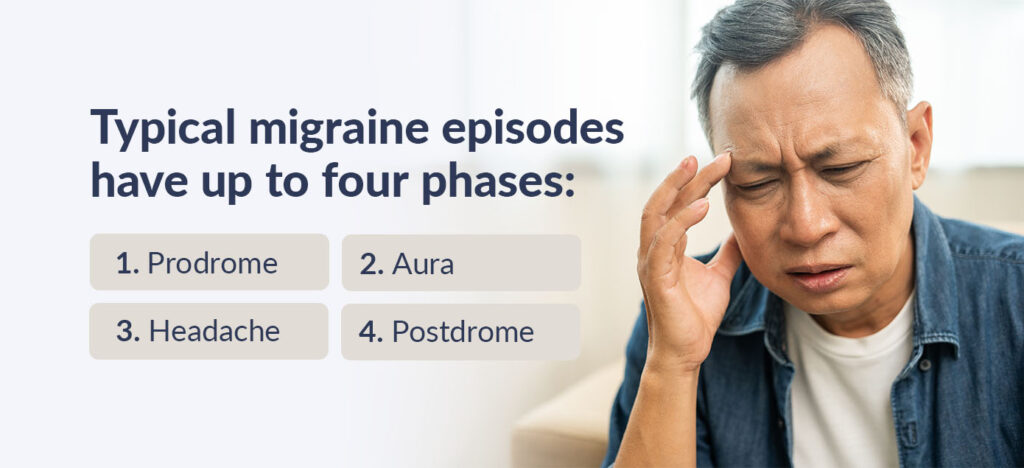
Typical migraine episodes have up to four phases:
- Prodrome: Many migraine episodes have a preceding phase called the prodrome. Its symptoms include neck stiffness, fatigue, cravings or mood swings.
- Aura: Some migraine episodes have a phase of sensory symptoms preceding the headache. Visual disturbances are the most common aura symptoms.
- Headache: A throbbing headache is the most prominent symptom in nearly all typical migraine episodes. Light and sound sensitivity and nausea often accompany the headache.
- Postdrome: Most migraine episodes end in a “migraine hangover.” Its symptoms include fatigue and brain fog.
“Complex migraine” can describe any type of migraine that progresses in an unusual way or has less common symptoms. For example, silent migraine episodes don’t involve a headache. Several complex migraine types have abnormal symptoms resembling stroke symptoms.
Try CEFALY for Migraine Relief
How long do complex migraine symptoms last?
Most complex migraine symptoms resolve within a few hours or up to three days at most. If you have an ophthalmoplegic migraine episode, your vision may take up to a few weeks to return to normal, but pain should resolve within 72 hours.
How do doctors diagnose complex migraine?
Your doctor probably won’t put “complex migraine” in your diagnosis. However, they may diagnose you with one of the specific subtypes, like hemiplegic migraine. They’ll look at your medical history, family history and symptoms, conduct a physical examination and run tests. If you keep a migraine journal that records your symptoms and triggers, sharing that information could help.
The main challenge is ruling out other conditions with similar symptoms, like stroke. Tests they can use to do this include:
- Genetic tests.
- Computed tomography (CT) scans.
- Magnetic resonance imaging (MRI) scans.
- Lumbar punctures.
- Electroencephalograms (EEGs).
Is complex migraine a ministroke?
Complex migraine is not a ministroke. A stroke is when blood flow to the brain is blocked or a blood vessel bursts, leading to temporary, permanent or lethal brain damage. A “ministroke” refers to a transient ischemic attack (TIA). This is a brief blockage of blood flow to the brain, not leading to lasting brain damage. Both conditions can cause:
- Weakness, numbness or paralysis on one side of the body.
- Difficulty speaking or understanding others.
- Double vision or loss of vision.
- Dizziness or loss of balance.
All these symptoms can happen with complex migraine, especially hemiplegic migraine, but a hemiplegic migraine is not a ministroke. Unlike stroke and ministroke, it does not result from blocked blood flow to the brain.
Of these three conditions, only a stroke is typically life-threatening. But because the symptoms are so similar, you should play it safe. Call for emergency care immediately if you experience stroke-like symptoms. Medical professionals can assess your condition and provide the care you need.
Is complex migraine a disability?
Complex migraine could count as a disability in some cases. If complex migraine episodes prevent or limit your ability to do your job, you may be able to ask for accommodations or claim disability benefits.
Is there a cure for complex migraine?
There’s no known cure for complex migraine. However, there are effective treatments to help reduce episode frequency and relieve symptoms.
Treatment options for complex migraine
If your doctor diagnoses you with any type of complex migraine, you can explore a range of treatment options, including:
- Migraine treatment devices: The CEFALY treatment device stimulates and desensitizes the trigeminal nerve, the brain’s main migraine pathway. There are no studies specific to complex migraine, but CEFALY is FDA-cleared to prevent and relieve migraine with or without aura. In one study, 79% of subjects experienced pain relief following an hour of ACUTE treatment with CEFALY.
- Behavioral remedies: Manage stress, keep a consistent sleep schedule and avoid triggers. All these habits can help reduce migraine frequency and severity.
- Preventive medications: Your doctor may prescribe anti-seizure medications, beta-blockers or calcium channel blockers.
- Acute medications: These include anti-nausea medications, abortive migraine medications and pain relievers. Consult your doctor before starting any new medications.
Try CEFALY for migraine relief
Complex migraine types vary, but many come with a throbbing headache that can disrupt your life. If this is your experience, CEFALY Connected could be part of your solution. CEFALY Connected has two modes — PREVENT and ACUTE — clinically proven to prevent and relieve migraine symptoms. Simply apply the adhesive electrode to your forehead, press the button for your preferred treatment, and relax for the 20-minute PREVENT or 60-minute ACUTE treatment.
You can buy and use CEFALY with no prescription and minimal ongoing costs. It’s safe to use alone or alongside medications as part of your migraine management plan.
Try CEFALY Connected with our 90-day money-back guarantee.







Latest Posts


“CEFALY Gave Me My Life Back”: Camille’s Search for a Drug-Free Migraine Treatment
Discouraged by her experience with medications, Camille began building a toolkit of non-pharmacologic migraine treatments. Find out what…

What Patients Need to Know About Episodic Migraine vs. Chronic Migraine
While official definitions classify episodic migraine as fewer than 15 headache days per month and chronic migraine as…