



Is It Migraine or Headache? Here’s How You Know
Some people live with severe, recurring headache pain for years, never suspecting that there could be a name for what they’re experiencing: migraine.
Migraine is more than a headache. It’s a debilitating neurological disorder that’s more of a “whole-body attack,” as migraine educator Dr. Karen Williams, DNP describes it. It’s incredibly common, affecting more than 1 billion people worldwide (most of them women), but it often goes undiagnosed. Migraine can look different in different people.
So how do you know if you might have it? The best way to find out is to see your healthcare provider — your primary care provider or a headache specialist. Here are some key things to know about the differences between migraine and tension (stress) headache.
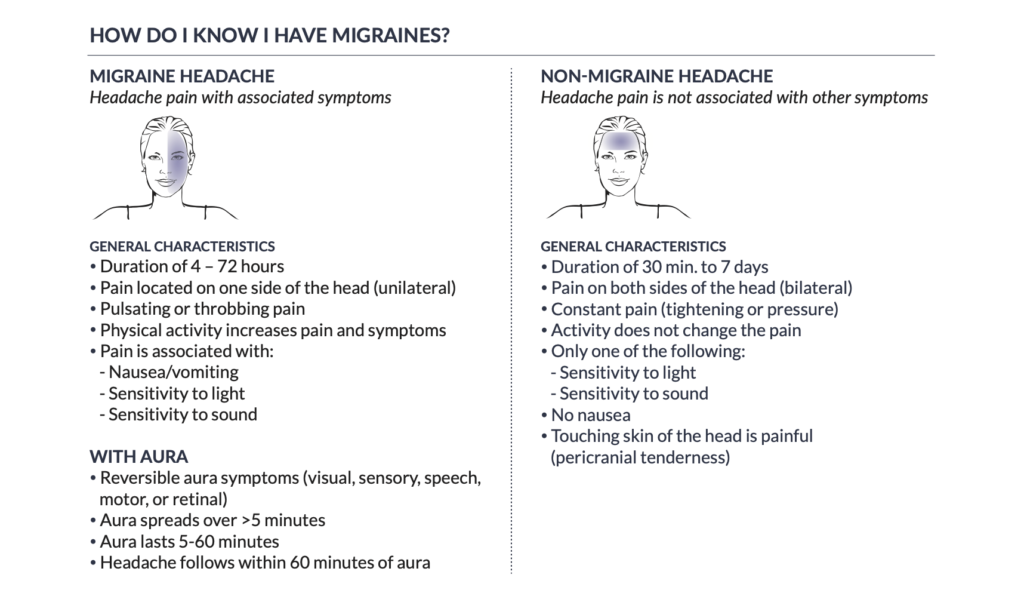
Headache vs. Migraine: Pain Level
A tension headache might interrupt your day… but a migraine headache stops you in your tracks. People who live with migraine describe it as an intense, pulsing or throbbing pain that’s usually felt on one side (left/right or front/back) of the head. Tension headache, on the other hand, is more of a dull squeezing pain felt on both sides, or all around the head.
While an over-the-counter pain reliever can help a tension headache, it’s typically not enough to make migraine pain go away. For some people, the pain is so intense they must lie down in a dark, cool room until it passes. Some may even have to go to the emergency room.
Important: If your headache symptoms change, or if you experience a severe and intense headache that comes on suddenly, aka a thunderclap headache, see your doctor immediately. This could be a sign of a serious health emergency.




Headache vs. Migraine: Other Symptoms
Tension headaches may make you more sensitive to loud sounds or bright lights, or may make your shoulders and neck ache. Migraine turns these symptoms up to 11: Both light and sound may be physically painful or unbearable, and your body may ache. Other common migraine symptoms:
- You feel worse if you move around
- You feel dizzy or nauseous
- Smells really bother you
- Physical touch bothers you
Headache vs. Migraine: Causes
Tension headaches can be triggered by stress, anxiety, eye strain, neck strain, or other causes.
Migraine attacks also can be sparked by stress — that’s the number-one trigger! But many, many other things can also lead to migraine attacks. A few of the most common are weather changes, hormonal changes, skipping meals, getting dehydrated, not sleeping well, bright or flickering lights, caffeine, alcohol, certain foods… the list goes on.
Headache vs. Migraine: Onset
Typically tension headaches come on suddenly, without advance warning.
Migraine headaches, on the other hand, are preceded by a phase called prodrome. This pre-headache phase can occur hours or days before the actual migraine attack starts. In prodrome, you may notice that you’re tired, irritable, moody, or foggy. You might crave certain foods, have trouble sleeping, and notice you have to pee more often.
Shortly before migraine symptoms begin, some people experience aura. This refers to sensory changes such as seeing flashes of light, bright spots, or other visual effects, temporarily losing vision, or feeling numb.
Headache vs. Migraine: Duration
A tension-type headache usually lasts anywhere from 30 minutes to 4 hours (although it can be longer). A migraine headache, on the other hand, lasts from 4 hours to 72 hours. Migraine treatments can shorten this duration.
Headache vs. Migraine: Treatment
Tension headaches are treated with over-the-counter pain relievers, hydration and rest.
Successfully treating migraine is much more complicated! Most people have multiple medications, non-drug treatments, and other remedies in their migraine toolkit. One of the most effective drug-free migraine treatments is CEFALY.
CEFALY is an FDA-cleared medical device that stops migraine pain at the source. It delivers tiny electrical impulses through the forehead to the trigeminal nerve, soothing migraine pain and preventing attacks. Unlike medication, CEFALY has no serious adverse side effects — and no prescription is required.
Find out why so many people with migraine say CEFALY is a life-changing device that helps them feel better and get back to life.
>>Start your 90-day in-home trial!
Meet with a CEFALY Coach to See if CEFALY Is Right for You

Migraine may indicate that you have a serious medical condition. Have any persistent pain checked by a qualified healthcare professional.



Latest Posts

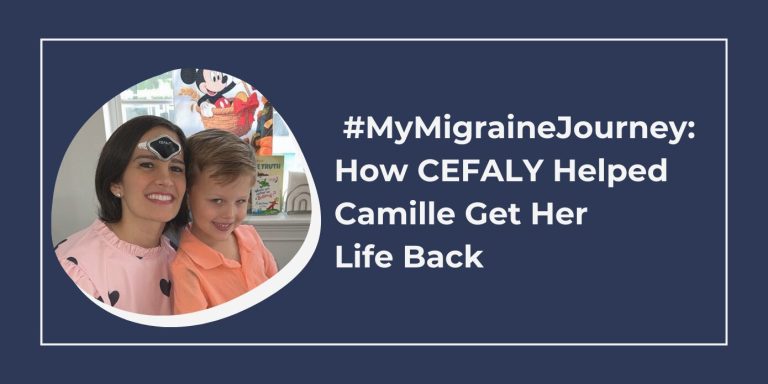
“CEFALY Gave Me My Life Back”: Camille’s Search for a Drug-Free Migraine Treatment
Discouraged by her experience with medications, Camille began building a toolkit of non-pharmacologic migraine treatments. Find out what…
What Patients Need to Know About Episodic Migraine vs. Chronic Migraine
While official definitions classify episodic migraine as fewer than 15 headache days per month and chronic migraine as…