




Dealing With Migraine at Work
People who get migraine attacks face a special problem in today’s busy workplaces. You might find yourself balancing your duties with pain and sensitivity to light and sound. Experiencing a migraine attack at work can impact your well-being and productivity.
Fortunately, there are ways to deal with migraine symptoms while in the office. If you experience migraine attacks at work, communicating openly with employers and developing an action plan can help you be prepared.
You can use these strategies to stay more comfortable and get more done while managing your symptoms.
How to get rid of a migraine attack at work
Migraine is a common neurological disorder, affecting approximately 39 million people in the United States. Dealing with a migraine attack during your workday can be challenging, but adopting the right strategies can help you get through it. Here are eight practical approaches to navigating a migraine attack while working:
Try CEFALY to Prevent & Relieve Migraine Pain
1. Seek a tranquil space
When migraine strikes, excessive noise can worsen the discomfort. Look for a serene, softly lit area where you can escape the bustling office environment. This helps minimize sensory overload and promotes relaxation.
2. Adapt lighting
Bright lights often trigger or intensify migraines. Dim the lighting or use a desk lamp with customizable settings when feasible. Opt for natural light whenever possible, as it’s often gentler on the eyes.
3. Practice controlled breathing
Combat stress and promote relaxation through deep breathing exercises. Take a few minutes to close your eyes, inhale deeply through your nostrils, hold briefly and exhale slowly through your mouth. Repeat as necessary to ease tension.
4. Stay adequately hydrated
Dehydration worsens migraine symptoms. Keep a water bottle within reach and make a habit of sipping water throughout the day. Choose water over sugary or caffeinated beverages, which may trigger headaches.
5. Manage screen exposure
Extended screen time strains your eyes and can trigger migraine. Adhere to the 20-20-20 rule — every 20 minutes, shift your gaze to something at least 20 feet away for a minimum of 20 seconds, giving your eyes a rest.
6. Incorporate relaxation techniques
Relaxation practices can relieve workplace tension. Try progressive muscle relaxation: alternately tensing and then releasing muscle groups. This technique can help ease both physical and mental stress.
7. Prioritize essential tasks
During a migraine attack, concentrate on crucial tasks and organize your to-do list accordingly. If possible, delegate less urgent duties. Tell your colleagues or supervisors what’s going on, so they understand you may not be able to get everything done.
8. Embrace brief breaks
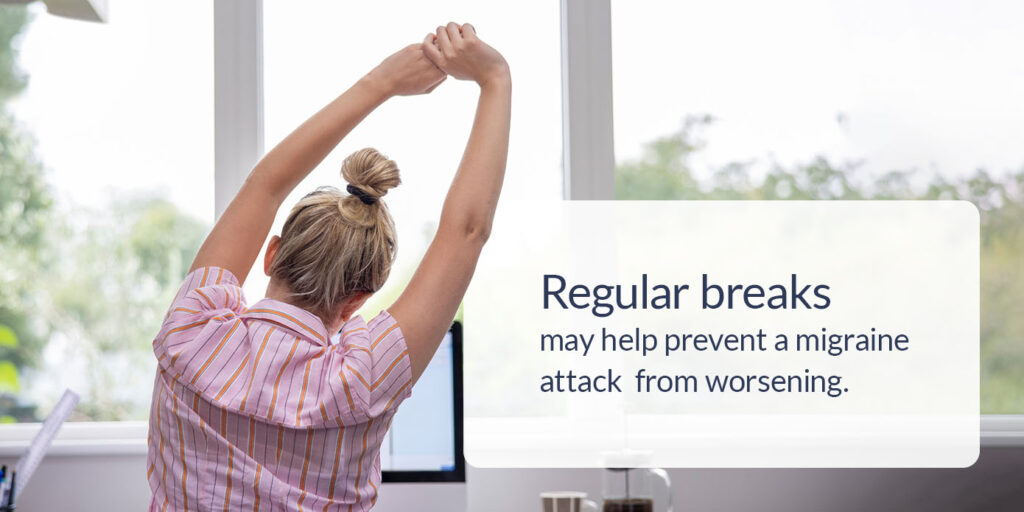
Regular breaks may help prevent a migraine attack from worsening. Stand up, stretch and take short walks to enhance blood circulation and reduce muscle strain. These breaks also provide mental relief, bolstering overall well-being.
What accommodations can you request?
Migraine disorder is a leading cause of disability and can result in a substantial loss of productivity, much of which is due to absenteeism. When managing migraine at work, it’s crucial to understand your rights and seek appropriate accommodations.
Here are seven types of accommodations to consider requesting for a more supportive and comfortable work setting:
- Flexibility in work schedule: Ask for the option to adjust your work hours or telecommute when needed. This flexibility can help you manage your energy levels and make it easier to cope with unpredictable migraine attacks.
- Adjusted lighting: Consider altering lighting conditions in your workspace. Dimmed or natural light sources can reduce visual strain and lower the chances of triggering migraine attacks.
- Noise reduction measures: Seek ways to minimize noise distractions. Reducing sensory overload can be beneficial, whether through noise-canceling headphones or relocating to a quieter office area.
- Ergonomic workspace: Request ergonomic furniture and equipment that promote proper posture. A comfortable chair, adjustable desk, and suitable keyboard and mouse can mitigate physical strain and help prevent tension-related migraine attacks.
- Designated break areas: Suggest creating a quiet area in your workspace for breaks or relaxation.
- Telecommuting options: If your job permits it, ask if you can work remotely during migraine days. Working from home offers a controlled environment for managing triggers and symptoms.
- Modified tasks: Collaborate with your supervisor to adapt your workload during migraine episodes. Working on tasks that don’t require intensive screen time or focus can maintain productivity while alleviating strain.
By advocating for your needs, you can ensure your workplace supports effective migraine management. Engaging in open dialogues with your employer or human resources department fosters a supportive environment where you can thrive, even with migraine.
Strategies for preventing migraine attacks at work
Effectively preventing migraine attacks requires a multifaceted approach. Adopt healthy habits and make conscious choices to reduce the chance of a migraine attack. Consider these prevention techniques:
Mitigate stress
Chronic stress is often a contributing factor to migraine onset. Integrate stress-relief techniques into your daily routine, encompassing deep breathing exercises, progressive muscle relaxation, meditation and mindfulness practices. Don’t take on larger workloads or responsibilities than you have the time and energy to manage.
Regulate sleep patterns
Inconsistent sleep routines can disrupt your body’s natural rhythm, triggering migraine attacks. Strive for a stable sleep schedule by sticking to consistent bedtimes and wake-up times, even on weekends.
Manage dietary triggers
Certain foods and beverages are recognized migraine triggers. Keep a record of your dietary intake to identify potential triggers and contemplate reducing or avoiding them. Noteworthy triggers you may note are aged cheeses, processed meats, caffeine, alcohol, artificial sweeteners and MSG-containing foods.
Monitor environmental factors
Sensory stimuli significantly influence migraine attacks. Minimize exposure to strong odors, bright lights and loud noises whenever feasible.
Engage in regular exercise
A consistent physical activity routine could help diminish the likelihood of migraine attacks. Strive for at least 30 minutes of moderate exercise on most days, opting for activities like brisk walking, cycling, swimming or yoga.
Learn How CEFALY Prevents & Relieves Migraine Pain
Add CEFALY to your migraine management toolkit
Among the array of migraine management options, one innovative treatment stands out: the CEFALY device. CEFALY offers a groundbreaking approach to migraine prevention that’s safe, effective and clinically proven.
By targeting nerve pathways associated with migraine pain through noninvasive neuromodulation, CEFALY can relieve pain and decrease the frequency of migraine attacks. Its user-friendly design and portability make it a valuable addition to your migraine management toolkit.
It’s tough to succeed in your job when you deal with debilitating migraine pain. CEFALY can help you manage migraine at work by providing drug-free relief without the side effects of medication. Visit our product page to learn more and try CEFALY for yourself!






Latest Posts


“CEFALY Gave Me My Life Back”: Camille’s Search for a Drug-Free Migraine Treatment
Discouraged by her experience with medications, Camille began building a toolkit of non-pharmacologic migraine treatments. Find out what…

What Patients Need to Know About Episodic Migraine vs. Chronic Migraine
While official definitions classify episodic migraine as fewer than 15 headache days per month and chronic migraine as…