



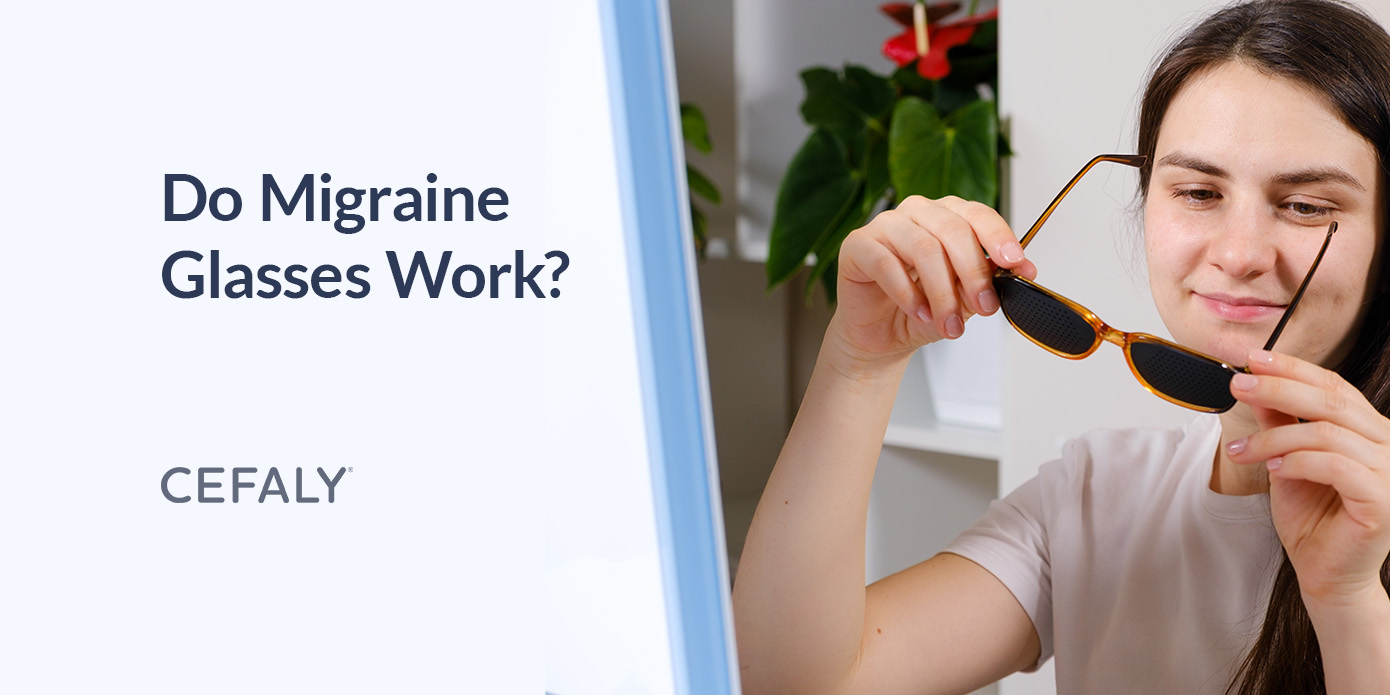
Do Migraine Glasses Work?
Any relief is welcome if you’ve experienced the debilitating effects of migraine. With over 37 million Americans suffering from migraine, innovative treatments are in demand. But some remedies work better than others. Distinguishing the best from the rest requires research and sometimes personal experimentation. If you’re wondering whether migraine glasses could work for you, our guide will help you decide.
What are migraine glasses, and how do they work?
Migraine glasses are eyeglasses with specialized lenses. They filter out the light wavelengths most aggravating to photosensitive migraine sufferers. These are the white-blue and red-orange ends of the visible spectrum.
Harsh light, especially blue light, is a common migraine trigger. Once a migraine starts, light sensitivity is also a symptom for up to 90% of people with migraine. Almost half of migraine sufferers say it’s their most bothersome symptom. For these reasons, lenses that filter harmful light could help prevent or relieve some episodes.
What are the types of migraine glasses?
There are a few different types of glasses that some migraine sufferers have used in hopes of pain relief or prevention:
- Polarized sunglasses: Polarized sunglasses with UV400 protection can help manage light sensitivity. However, your eyes may become dark-adapted, worsening photophobia in the long run.
- Blue light glasses: These glasses are designed to filter blue light, especially from screens and devices. Only a few small studies have been done on blue light blockers and migraine, so it’s hard to say whether or not they work.
- FL-41 tinted lenses: Fluorescent 41 (FL-41) tinted migraine glasses filter out blue light but don’t block red-orange light. They have been shown to help with migraine prevention. The rose migraine glasses tint can distort color perception.
- Avulux lenses: Avulux glasses are a newer product for people with migraine. Their lenses block more blue light than FL-41 or common blue light glasses. They also filter red-orange wavelengths. Avulux lenses absorb up to 97% of harmful wavelengths but allow beneficial green light through. Unlike FL-41 lenses, they allow normal color perception. If you wear glasses for vision correction, you can also have your Avulux lenses customized with your prescription.
Do migraine glasses work?
Since photophobia is such a prevalent migraine symptom, any glasses that filter harsh light could offer some relief. Certain light frequencies, especially blue light, can also trigger migraine episodes for many people.
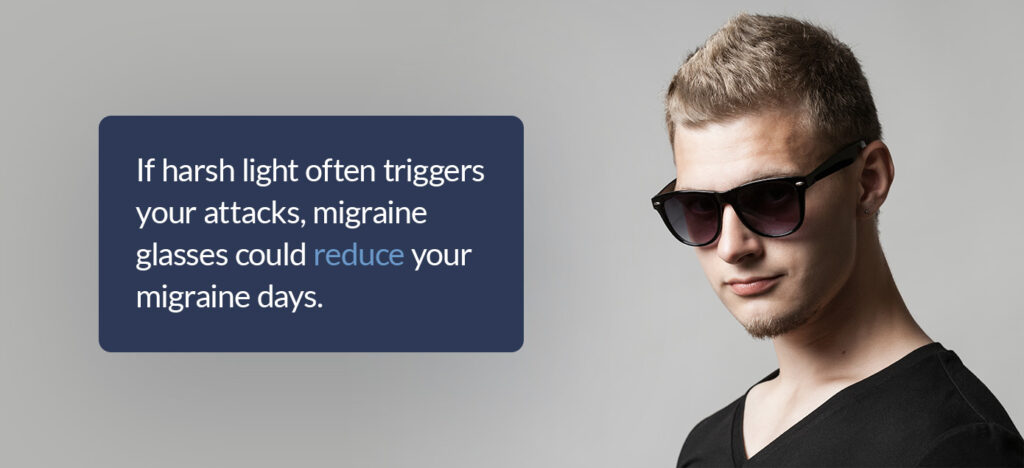
If light often triggers your attacks, migraine glasses could help with migraine prevention. Among the current options are Avulux lenses. They are most effective for blocking both blue and red-orange light wavelengths without warping vision. It could be worth trying a pair to see whether they can help support your migraine management plan.
Studies suggest that migraine lenses reduce light sensitivity and may reduce pain. There’s no evidence that they can consistently prevent migraine episodes, though. Wearing them could help if harsh light often triggers your attacks.
Try CEFALY to Prevent & Relieve Migraine Pain
What are the alternatives to migraine glasses?
Although migraine glasses may not yield all the results you hope for, you have other options. Consider using one or more of these with or instead of migraine glasses.
Migraine medication
Various preventive and pain-relieving medications are available. While no drug can cure migraine, several can reduce migraine frequency. These include:
- Blood-pressure-lowering medications such as beta blockers and propranolol.
- Some antidepressant medications like amitriptyline.
- Anti-seizure drugs like valproate and topiramate.
- Botox injections every three months.
There are also several options for pain relief when migraine episodes do occur. They range from over-the-counter pain relievers to prescription drugs requiring careful medical supervision. A few options are:
- Common pain relievers like aspirin or ibuprofen.
- Triptans, including sumatriptan and rizatriptan.
- Lasmiditan.
- As a last resort, opioid medications.
Seek advice from your doctor before using medicines for migraine prevention or relief.
Lifestyle changes
Behavioral and lifestyle changes could contribute to reduced migraine frequency and milder symptoms. These changes alone may not stop migraine, but they are healthy, safe and worth incorporating into your lifestyle. Behaviors to reduce or mitigate migraine include:
- A diet that avoids trigger foods like alcohol and processed meats.
- Consistent hydration, sleep and exercise routines.
- A migraine-conscious supplement regimen with vitamins and minerals.
- Massage sessions to relieve muscle tension in the shoulders, neck and head.
- Cognitive behavioral therapy to shift thought patterns and habits related to migraine.
- Meditation, acupuncture and yoga to promote mental and physical well-being.
- Limiting screen time by taking 20-second breaks every 20 minutes to look away.
- Practicing techniques for stress management.


Neurostimulation
Neurostimulation targets nerves related to migraine pain with electrical currents. There are several types of neurostimulation therapy, including:
- Remote electrical neuromodulation (REN): A REN device targets peripheral nerves. This activates the brain’s Conditioned Pain Modulation (CPM) system for pain relief. You need a prescription to get an REN device.
- Dual-nerve neurostimulation: Dual-nerve stimulators target both the trigeminal and occipital nerves. The trigeminal nerve is the main pathway for migraine pain. The occipital nerve may play a role in some migraine symptoms. A prescription is required for this kind of device.
- Vagus nerve stimulation (VNS): A VNS device targets the vagus nerve, which runs from the side of your neck to your stomach. It can be effective for migraine relief and prevention but comes with ongoing prescription refill costs.
- External trigeminal neurostimulation (eTNS): eTNS targets the trigeminal nerve. It aims to stop acute migraine pain and reduce episode frequency. You can buy an eTNS device without a prescription. Ongoing costs are minimal, and the device is easy to use. In one study, 79% of patients saw a significant reduction in headache pain after one hour of CEFALY ACUTE treatment.
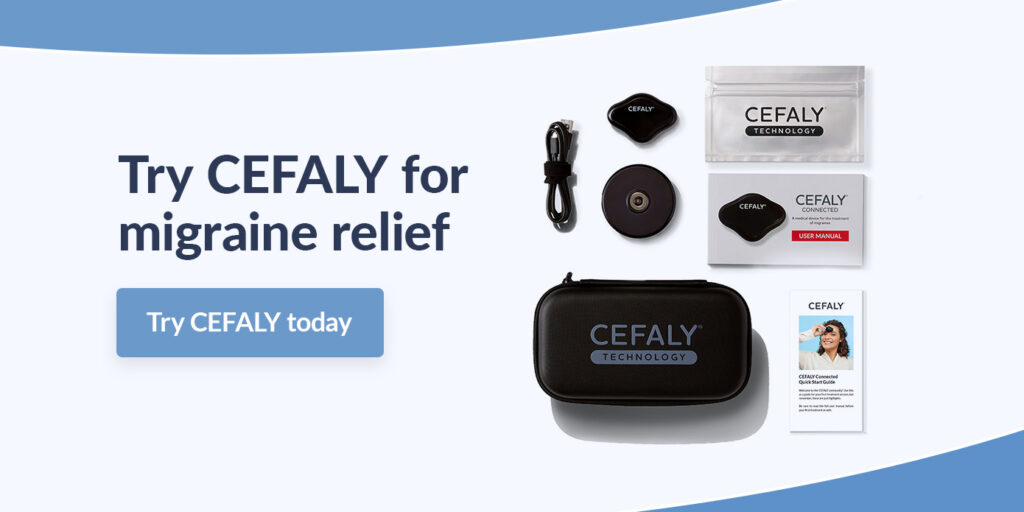
Try CEFALY for migraine relief
For a clinically proven solution for migraine relief and prevention, try CEFALY: the number-one eTNS device for migraine.
The Bluetooth-enabled CEFALY Connected provides portable pain relief wherever you are. This FDA-cleared eTNS device is easy to use and effective. Use it alone or with other treatments, like migraine glasses or medications.
Try CEFALY Connected with a 90-day money-back guarantee.
Latest Posts


“CEFALY Gave Me My Life Back”: Camille’s Search for a Drug-Free Migraine Treatment
Discouraged by her experience with medications, Camille began building a toolkit of non-pharmacologic migraine treatments. Find out what…
What Patients Need to Know About Episodic Migraine vs. Chronic Migraine
While official definitions classify episodic migraine as fewer than 15 headache days per month and chronic migraine as…