




Building a Migraine Support Network: Why You Should Connect With People Who Have Similar Medical Conditions
- Importance of social support in chronic migraine management
- How to build your migraine support network
Dealing with migraine can be challenging, and avoiding triggers can leave you isolated. The link between human connection and mental health can provide relief for people who experience migraine.
Stress is a trigger for almost 70% of people who experience migraine. Having a support network can keep stress at bay and lead to better mental and physical health outcomes. A network of like-minded people also helps you cope with difficult times, stress, anxiety and depression.
Understanding the importance of social support in chronic migraine management
Living with chronic pain or the fear that a migraine can strike impacts your quality of life. Social support is crucial for people with migraine and other chronic illnesses. Social interaction can help you manage the physical and psychological effects of migraine.
The value of social support
Social support is a significant factor in self-managing chronic diseases. The benefits of connecting with others include reduced stress, anxiety and depression. When you have a community around you, you can manage your illness with more confidence. Your support system can remind you to take your medication, check in on you when you’re experiencing migraine, and offer compassion and a listening ear.
In short, social support can improve your self-belief and lead to better health outcomes. A support network can promote healthy eating, encourage physical activity and improve sleep. These elements can reduce the effects of migraine.
Migraine support groups
The purpose of a support group is to ensure you never have to handle migraine alone. Social support is critical in preventing and reducing migraine attacks. Migraine patients have higher general loneliness and are also more likely to experience depression and anxiety. Building a network of people who can check in with you is essential. Having a support system who can empathize with your experience is also important.
At least 39 million Americans live with migraine. Connecting with a community that understands how you feel can be transformative. Some examples of migraine support groups include:
- Migraine Again: This community for people with migraine and frequent headaches allows you to share solutions.
- Miles for Migraine: An advocacy group that hosts charity races to raise money for migraine research.
- CHAMP: An online community and resources for people with migraine.
- Move Against Migraine Community: A source of daily support and information for people with migraine.




How to build your migraine support network
Building your support network starts with a single step. The following tips and tricks can help you make the first move:
Discuss your condition with people you trust
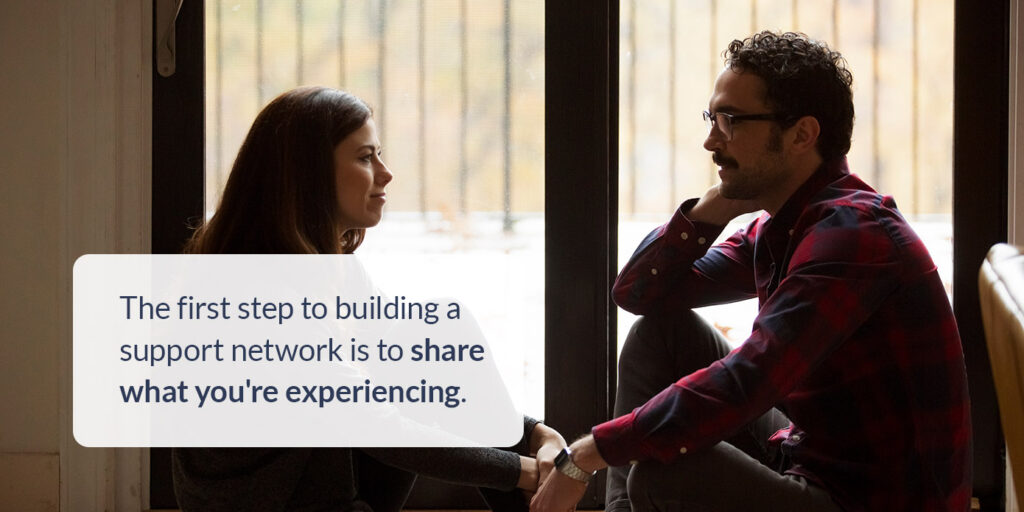
The first step to building a support network is to share what you’re experiencing. If your loved ones don’t have migraine, explain how it feels. Let them know it’s more than a headache — it’s a complex neurological disorder. Describe your symptoms so that they can empathize with your experience.
Educate your loved ones
The more information your team has, the better they can support you. Gather some information and statistics about migraine. Explain how it affects you. Then, let them know how they can help you. It might involve taking you to doctor’s appointments or simply visiting and checking in. Whatever you need, they’ll likely be willing to assist.
Stay engaged with your current community
Reducing exposure to migraine triggers may lead you to withdraw from your community. Spending time at home can benefit you but also lead to loneliness. Social relationships are essential for those with migraine. Staying connected with your community is critical.
You could try a technique called pacing, which involves planning your activities to align with your energy levels. It’s also vital to take regular breaks. This option gives you time with your community while avoiding potential triggers. Your community can also support healthy habits. It’s always easier to reach your health goals with support.
Create an emergency plan
Your friends and family can help you live your life with migraine. They can help you create a migraine-friendly home or support you with an emergency plan. Since migraine can come out of nowhere, your emergency plan is there to help you. Depending on your lifestyle, your emergency plan could include:
- Someone to collect you if you need help getting home.
- Someone to fetch your children from school and care for them.
- An emergency contact to care for you during a migraine attack.
Involve your doctor
Your doctor is one of the most important parts of your support system. They should work through your migraine attacks with you and provide consistent support. If necessary, find yourself a doctor who meets these requirements. The right doctor will go the extra mile to help you control your attacks.
You should always feel your medical team is listening to you. If your current medical team makes you feel uncomfortable, find a provider you can trust.
Put together a migraine toolkit
There are times when managing migraine attacks yourself is the only option. Being prepared can reduce your pain. Knowing you have everything you need alleviates anxiety. Put together a complete migraine toolkit with all the essentials. Some items to include:
- Ice packs and an ice roller: Cold therapy can effectively relieve pain.
- A heating pad: Applying heat can release muscle spasms. Many people combine it with cold therapy for the best results.
- Water: Keep some bottled water in your migraine toolkit to alleviate the effects of migraine or stave off an attack.
- Essential oils or herbal remedies: If you’ve experienced migraine, there may be a natural remedy that works for you. Add these to your toolkit.
- Medication: Ensure you always have prescribed medicines on hand. If you use over-the-counter options, keep them topped up at all times.
- CEFALY: CEFALY is a fast-acting treatment for migraine. In one study, 79% of acute migraine sufferers saw pain relief after an hour-long CEFALY ACUTE treatment. For maximum effectiveness, start using the ACUTE treatment as soon as you sense an imminent attack.
Connect with others
Technology allows us to connect with people from our own homes. Many communities exist for people with migraine, whether you need more in-person support or want to grow your community online.
Find a positive group that promotes healthy discussion and provides legitimate medical resources. You can learn from your community, but you can also share your own experiences. Talking about your migraine journey could help someone else, which is empowering.
The value of connection in migraine management
Migraine management is challenging, but it’s easier with support. Creating connections and building a support group make all the difference. Discussing your experience and learning from people who share medical conditions may give you new treatments to try.
Connect with others and build your migraine support system today. Start following CEFALY on social media channels to benefit from others’ experiences, gain valuable information, and participate in events and contests. Learn more about how CEFALY works today!






Latest Posts


“CEFALY Gave Me My Life Back”: Camille’s Search for a Drug-Free Migraine Treatment
Discouraged by her experience with medications, Camille began building a toolkit of non-pharmacologic migraine treatments. Find out what…

What Patients Need to Know About Episodic Migraine vs. Chronic Migraine
While official definitions classify episodic migraine as fewer than 15 headache days per month and chronic migraine as…