



Back-to-School Strategies for Students with Migraine
Does the return to school mean a return to migraine pain? For many students, it does.
A study of 1,300 emergency department visits over four years at Nationwide Children’s Hospital showed that the number of headache visits stayed stable — except for fall, when they increased by more than 31% in children ages 5 to 18 years old.[i] Study leader Ann Pakalnis, MD, Director of the Comprehensive Headache Clinic at Nationwide Children’s, attributed the rise to back-to-school stress.
Migraine occurs in 8% to 15% of high school-aged children, according to the Cleveland Clinic.[ii] For those dreading going back to school because of migraine, these migraine management strategies may help.
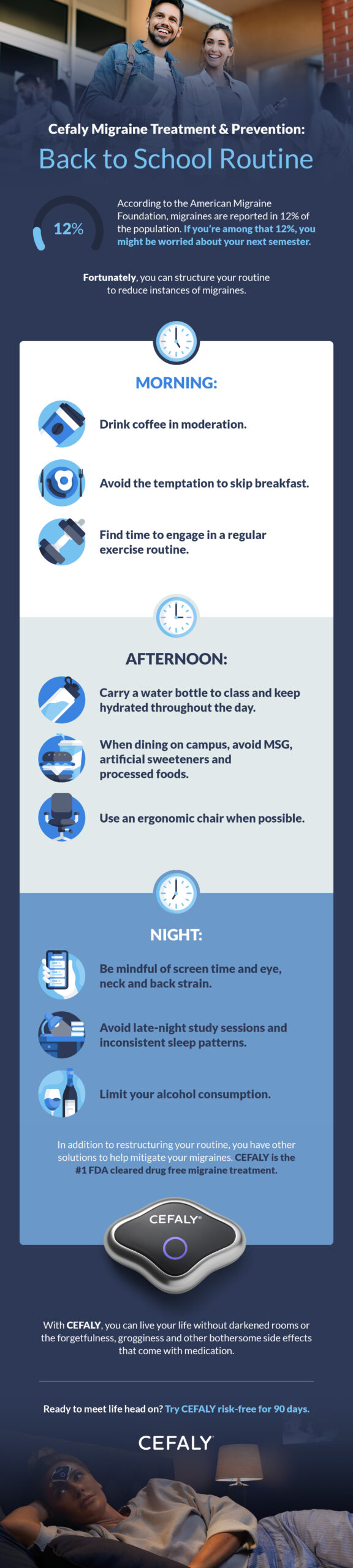
The start of the new school year means creating a new routine. However, dealing with migraines is one routine you may want to leave behind this semester. At least 12% of the population suffers from migraines. If you are among that number, you may have some concerns about the upcoming school year. Fortunately, you can structure your schedule to reduce the risk of a migraine.
Morning
One of the more common migraine patterns is to go to bed feeling fine and then wake up with a migraine. Experiencing a migraine in the morning can be especially frustrating because it may seem as though nothing happened during the night or the day before to cause your symptoms. Try these tips to help beat your morning migraine:
- Drink coffee in moderation. Small amounts of caffeine can help relieve migraine pain or enhance pain relievers such as aspirin.
- Avoid skipping breakfast. While you may want to skip morning meals to get to class earlier, eating a healthy breakfast at about the same time every day can help reduce migraines.
- Create and maintain a regular exercise routine. During exercise, your body releases chemicals that block pain signals to your brain and help relieve migraines.
Afternoon
An afternoon migraine can cause you to miss classes, extracurricular activities or sports practice. Most afternoon migraines result from triggers earlier in the day, such as stress. Here are some tips for preventing and relieving afternoon headaches:
- Carry a water bottle to class and stay hydrated throughout the day. Carrying a water bottle and using it throughout the day can keep your body hydrated and reduce the risk of migraines.
- Avoid MSG, artificial sweeteners and processed food when dining on campus. When you eat in the dining hall, ask which foods contain MSG, processed foods and artificial sweeteners so you can enjoy an afternoon of classes without worrying about your migraine.
- Use an ergonomic chair. As you look for a chair to sit in, make sure it is adjustable for your height and width. The ideal chair should also provide adequate head support to reduce tension in the base of your skull, jaw and shoulder muscles.
Night
After a long day of classes, the last thing you want is to experience a migraine as you begin your homework or try to unwind for the day. While the exact cause of your nighttime headache may vary, you can try these tips for relief:
- Be mindful of screen time and eye, neck and back strain. Turning off your phone or putting your laptop away at least 30 minutes before bed can help reduce migraines and eye, neck and back strain.
- Avoid late-night study sessions and inconsistent sleep patterns. Ending a study session early and sticking to a sleep schedule can help prevent migraines.
- Limit alcohol consumption. Alcohol’s main ingredient is a chemical called ethanol, which can trigger a migraine. If you’re not sure how much alcohol you can enjoy before a migraine occurs, try keeping a journal to see if you can determine a pattern.
Migraine Management for High School Students
Find your migraine allies. These are people who understand what migraine is and who are willing to support you in your journey. Your best migraine allies may be classmates, teachers, friends or online connections.
Commit to sleeping a little more. Sleep disturbance and sleeping late are both known to be common migraine triggers.[iii] Teenagers with migraine are getting far less than the recommended minimum of 8 hours of sleep for their age group, one researcher found, although more research needs to be done to connect sleep time and migraine days.[iv] Nocturnal, sleep-deprived students should try going to bed just 30 or 60 minutes earlier to see if that has a positive effect.
Learn stress relief techniques. Stress is another common migraine trigger. The pressures of high school can feel overwhelming, but you do have the power to take control of your stress. Practice simple stress relief techniques to release the pressure.
Migraine Management for College Students
Take charge of your migraine treatment plan. Your parents have probably guided your treatment up until now: scheduling doctor’s appointments, filling prescriptions, and explaining your condition to others. Now, it’s time for you to take the reins. Find a local headache specialist you can consult if your symptoms change or worsen. Begin tracking your triggers with a migraine management app, like CeCe from CEFALY Technology.
Don’t be afraid to ask for accommodations. Many students try to tough it out, concealing the severity of their condition. But when a migraine attack makes you miss your midterm exam, your professor might question whether it’s real of just an excuse. Be proactive: Inform your professors about your condition at the start of the school year (if you feel comfortable doing so) and request any accommodations you might need. Your academic adviser and/or college’s disability services office can help explain the process and your rights as a student with a disability.




Treat Your Migraine With CEFALY
Restructuring your daily routine for migraines is just one step you can take to feel better this semester. As the leading FDA-cleared drug-free migraine treatment, CEFALY can help you live your life without the forgetfulness, grogginess or darkened rooms associated with migraine medication.
Consider new treatment options. Some effective migraine treatments — including CEFALY — are indicated only for patients 18 years of age or older. If you’ve recently turned 18, you should re-examine your migraine treatment plan to see if there are new options available.
If you’re ready to meet life head-on, try CEFALY for 90 days with a money-back guarantee.




Latest Posts


“CEFALY Gave Me My Life Back”: Camille’s Search for a Drug-Free Migraine Treatment
Discouraged by her experience with medications, Camille began building a toolkit of non-pharmacologic migraine treatments. Find out what…

What Patients Need to Know About Episodic Migraine vs. Chronic Migraine
While official definitions classify episodic migraine as fewer than 15 headache days per month and chronic migraine as…