



Tips for Avoiding Migraine at the Beach in the Sun
It can be challenging to enjoy doing anything during a migraine attack. Although they occur spontaneously, attacks can also be triggered by certain factors. According to a study on 200 migraine patients, each of them had at least one trigger factor, while 95.5% of them had at least two.
If you have an upcoming vacation planned, you may want to know how to avoid beach migraine and make the most out of the experience. Learning the triggers can help.
Smart strategies to help avoid migraine at the beach
To prevent migraine, your beach preparation has to start the night before. Here are the steps you can take to fully enjoy your beach day:
1. Get adequate, good-quality sleep
Sleep deprivation or changes in your sleep cycle can trigger a migraine. If you’ve completed the suggested seven to eight hours, but find yourself waking up throughout the night, you can also be susceptible to an attack. A lack of sleep and poor sleep quality make you more sensitive to pain, so try to get a good sleep at least the night before your beach day. This can also make you feel fully rested and ready to take on the ocean.
2. Only pack migraine-friendly snacks
Certain foods and drinks can trigger a migraine because they affect the brain and blood vessels. For instance, food that causes blood vessels to constrict or dilate can be triggering. Some chemicals, like serotonin and norepinephrine, also affect the blood vessels and nerve signals, so it’s best to avoid food that releases these chemicals. Examples of these foods include nuts, milk and cheese.
Some data also show that chocolate can be a trigger, while other studies show that it’s a protective factor. Similarly, caffeine can serve as a migraine treatment for some, but also cause a migraine for others. It’s best to track which foods you think trigger an attack before your beach day, so you know what affects you, specifically. Also, when preparing your snacks beforehand, it’s best to avoid a potential trigger altogether rather than risk a migraine.
3. Ensure your beach essentials are migraine-friendly
Apart from snacks, your other essentials might also be lingering triggers. For instance, is your sunscreen scented? How about your insect repellent? Studies show that people report odor to be a trigger factor over 30% to 70% of the time, with perfume being the number one factor. The reason behind this trigger is still unknown. However, choosing fragrance-free products can help you avoid the risk.




4. Have a water bottle on hand
Dehydration is a major trigger for many who experience migraine attacks. Instead of packing lots of colored drinks, like soda and juice, it’s best to drink more water instead. You can get more hydration if you mix your water with electrolytes. However, water alone can still be a huge help. Note that soda can also have caffeine, which can be a trigger.
Additionally, it may be best to avoid fasting or skipping meals before and during your beach day. Fasting involves abstaining from food and drinks, including water, which increases your chances of dehydration.
5. Prepare your sun protection essentials
Sun and migraine don’t mix well. Many who experience migraine attacks are also susceptible to photophobia, a condition that makes you extremely sensitive to light. While this sensitivity is considered a symptom, bright light itself is a trigger factor for over 20% of Americans, including the ultraviolet (UV) radiation you get from the sun.
People who experience migraine may be more sensitive to light even without the headache. What’s more, the sun’s UV rays can affect the nerves in your skin, releasing calcitonin gene-related peptide (CGRP) and nitric oxide (NO). These substances cause your blood vessels to dilate, which is a migraine trigger.
Wearing polarized sunglasses can protect your eyes from too much bright light, while also blocking the harmful glare from the sun. Additionally, beach hats with broad brims can protect your neck and upper chest, while beach umbrellas can shade you entirely regardless of where you sit on the beach.
Keep in mind that some researchers hypothesize that hot, ambient temperature can add stress to the body, triggering a migraine attack. Hot and dry winds may also accelerate the release of serotonin, triggering the same. If you start to feel the symptoms, take the necessary precautions right away to avoid the migraine from worsening.
Common migraine symptoms
While people might experience migraine differently, a migraine attack typically has four stages:
- Prodrome stage: The prodrome stage is the first stage, which starts about one to two days before you start to experience a headache. You may experience symptoms like mood changes, constipation, neck stiffness, increased urination or frequent yawning.
- Aura stage: People can experience an aura before or during a migraine attack. This aura can include flashes of light or blind spots. It can also cause tingling in your arm, leg or on one side of your face. People with an aura may also have trouble speaking.
- Attack stage: When the migraine begins, it can last from four hours to three days, although this varies for each person. During a migraine, you might experience pain on one or both sides of your head, throbbing or pulsing pain, photophobia, sensitivity to sound, nausea and vomiting.
- Postdrome stage: The last stage of the migraine attack can last up to two days, during which you might feel drained, confused or elated. You may still need to rest more, as sudden head movements can still be painful. This stage is also known as the “migraine hangover.”
When you feel a migraine coming on
Once you start experiencing migraine symptoms, it’s best to take action right away to avoid it from progressing to the other stages. These steps may help you out:
- Take your medication: Although there’s currently no known cure for migraine, your doctor may have prescribed medications to help alleviate the pain from the attack. Take these medications right away. It can be harder to relieve yourself of the pain if you wait until it gets worse.
- Move to a shaded room: If your migraine is caused by the sun’s bright light, moving to a shaded room, like a nearby cafe, can help. Some people who experience migraine attacks move to a very dark room to block all sources of light. If this is not possible right away, you can take other measures such as lying under a blanket and playing white noise on your headphones.
- Hydrate and cool down: To hydrate and fight the heat, drink a bottle of water and place a cool cloth over your head or neck.
- Leave the beach early: Leaving the beach early can be the best way to mitigate the symptoms, especially if your environment is loud and you find the heat uncomfortable.
- Know when you should see a doctor: Getting a headache after a beach day might seem like any other migraine attack. However, you should see a doctor right away if you experience an abrupt and very awful headache, a headache accompanied by a fever or sudden weakness in any part of your body or a new type of headache if you’re over 50 years old. For any symptom you’re in doubt about, it’s best to seek professional advice right away.

Get yourself beach-ready with CEFALY
Experiencing migraine after being in the sun can be hard to avoid. However, CEFALY is the first device of its kind that can help you prevent migraine with regular use. Our device has treated over two billion migraine attacks, with over 56% of users reporting that CEFALY resolved their most bothersome symptoms. Seventy percent of users also reported pain relief after two hours of treatment.
If you’re planning to go on a beach day, having this device on hand can help alleviate potential migraine symptoms. CEFALY is an FDA-cleared, clinically proven device you can carry with you wherever you go. We also offer a 90-day money-back guarantee. If you’re ready to test it out, get your own CEFALY today.


Latest Posts
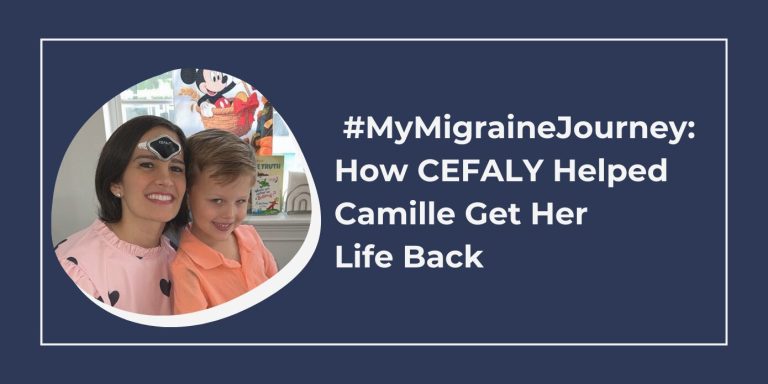
“CEFALY Gave Me My Life Back”: Camille’s Search for a Drug-Free Migraine Treatment
Discouraged by her experience with medications, Camille began building a toolkit of non-pharmacologic migraine treatments. Find out what…
What Patients Need to Know About Episodic Migraine vs. Chronic Migraine
While official definitions classify episodic migraine as fewer than 15 headache days per month and chronic migraine as…