



Best Herbs for Migraine
Herbs for migraine headaches — do they really work? Herbal remedies can be controversial, with some people swearing by them while others remain skeptical. Research suggests that certain herbs may actually help reduce migraine frequency and severity. Continue reading to find out how much of this is true and which herbs might be worth trying.
What are herbal supplements?
Herbal supplements are derived from plants and are used to potentially treat diseases and maintain health. They can be consumed as pills and tablets, liquids, powders, teas and tinctures. Herbal products can also use various parts of a plant, such as its:
- Flowers
- Fruits
- Leaves
- Oil
- Roots
- Seeds
Although many over-the-counter (OTC) and prescription drugs also use plant derivatives, they’re not the same. These medications use ingredients regulated by the United States Food and Drug Administration (FDA). Herbal supplements fall under the dietary supplements category according to the FDA. Under the Dietary Supplement Health and Education Act (DSHEA), the FDA cannot approve such supplements before they’re marketed, but there are specific regulations they do have.
Herbal supplement use dates back thousands of years, originating in countries like China and India. Although herbal medicine has a rich history and has helped shape modern medicine, it’s still subject to scrutiny by consumers, the FDA and other governing agencies. However, there are studies showing promising effects on people with migraine.
What herbal supplements help with migraine?
If you want to use herbs for migraine, you have a few options. Continue reading to learn the top seven herbal treatments for migraine. Just be aware that we can’t give you medical advice; before taking any herbal supplements, talk to your healthcare provider.
1. Butterbur (Petasites hybridus)
Butterbur is a wetland shrub that has large leaves with sharp edges. Its leaves were traditionally used to wrap butter to keep it from melting in warmer weather, hence the name. Butterbur roots were also used in the Middle Ages as a way to fight the plague. Today, it’s used as a dietary supplement for migraine and other health conditions.
Studies show that the active ingredient in butterbur, petasins, can help prevent migraine attacks. The petasins block calcitonin gene-related peptide (CGRP) — a pain-transmitting protein — nociceptive pathways. In other words, it acts as a CGRP inhibitor that may help migraine pain.
However, there are concerns about the plant’s pyrrolizidine alkaloids (PAs), which can affect the lungs and liver. If you do consider using butterbur products, the National Center for Complementary and Integrative Health (NCCIH) suggests you use PA-free supplements. Note that some manufacturers may place false guarantees on the label.
2. Feverfew (Tanacetum parthenium)
Feverfew, or featherfew, is a small Eurasian flowering bush with feather-like leaves and flowers that look like daisies. Some even refer to this plant as medieval aspirin. It was traditionally used to treat fever, but it also aided with pain, inflammation and other health conditions.
It can also be used as a migraine remedy, thanks to active compounds like parthenolide. Feverfew can help with minor pain and blood vessel relaxation. However, studies are mixed on its effectiveness against migraine attacks.
Although there are no serious side effects known about its use, it can possibly cause nausea, bloating and digestive problems. Chewing its leaves may also cause mouth irritation.
3. Ginger (Zingiber officinale)
You may know ginger only for its root and as a popular cooking ingredient, but did you know that it can also be used as a “natural triptan”? Triptans are a class of medication used to treat migraine. They influence the body’s blood circulation and pain signaling.
We have phenolic compounds to thank for that. Two chemical compounds — gingerols and shogaols — have pain-relieving and anti-inflammatory effects. Some studies show ginger’s positive effects on migraine, but further research is required. Ginger is also famous for its other benefits and for being an antibacterial, antifungal and antiviral agent.
4. Valerian (Valeriana officinalis)
Valerian, also known as all-heal, is a small Eurasian plant with tiny white, pink or purple flowers. Its use dates back to early Greece and Rome — from Hippocrates’s time. Back then, its roots were used to treat fatigue, insomnia, stomach cramps and migraine.
Today, valerian helps with headaches, insomnia, anxiety, premenstrual syndrome and menopause symptoms. While there isn’t much research on its effectiveness for migraine, its antioxidant, anti-inflammatory and sedative activities may help with sleep and sleep quality. There are many links between sleep and migraine, and improving your sleep may help prevent migraine onset.
5. Lavender (Lavandula angustifolia)
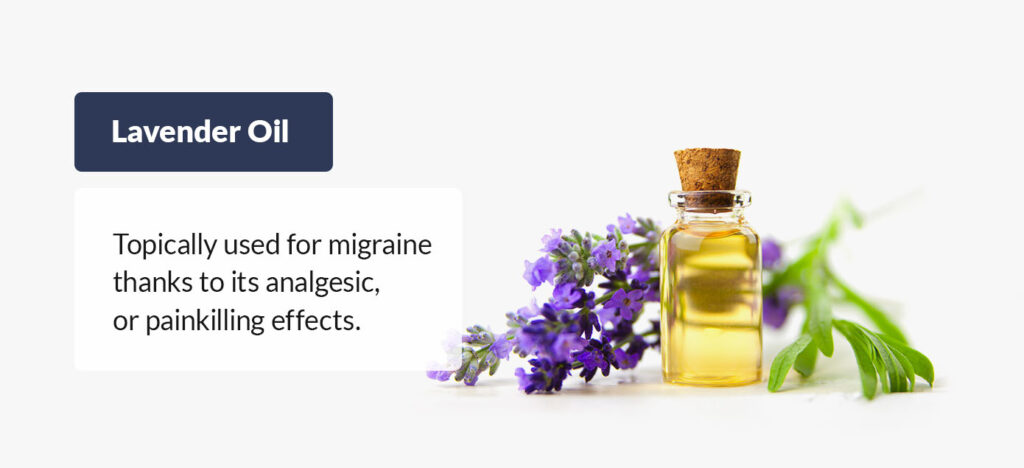
Lavender is another well-known and aromatic plant, popularly used in perfumes, bath products and aromatherapy. Lavender oil, in particular, is used to help with anxiety, depression symptoms and sleep quality. Its oil is also topically used for migraine thanks to its analgesic, or painkilling, effects.
Some people may find that inhaling lavender essential oil or taking it as a supplement can make their migraine attacks less painful and frequent. It may also help with nausea and improve sleep, which is important since poor sleep can trigger migraine.
6. Peppermint (Mentha x piperita)
This herb is a cross between two mint types — spearmint and watermint — and it’s indigenous to Europe and the Middle East. Its leaves and oil have been used for health purposes since ancient Egypt, Greece and Rome. Its oil, in particular, can help with migraine intensity and frequency due to its major active ingredient, menthol, which has a cooling effect.
Peppermint can also help with relaxing tight muscles, improving blood flow, and reducing pain and nausea, which often come with migraine. Rubbing diluted peppermint oil on your temples or smelling it may make migraine feel less intense. However, peppermint may not work for everyone and could cause mild stomach issues, heartburn or dry mouth if ingested.
7. White willow bark (Salix alba)
A willow tree’s bark is where its secret lies. Willow bark could help with migraine because it contains salicin, a natural compound similar to aspirin — dubbing it “nature’s aspirin.” It’s been used for centuries to alleviate pain and inflammatory conditions.
Salicin reduces pain and inflammation by blocking chemicals in the body that cause headaches. Willow bark may also improve blood flow, which can help prevent migraine. Some people take it as a supplement to relieve mild to moderate migraine pain.
Are herbs good for migraine?
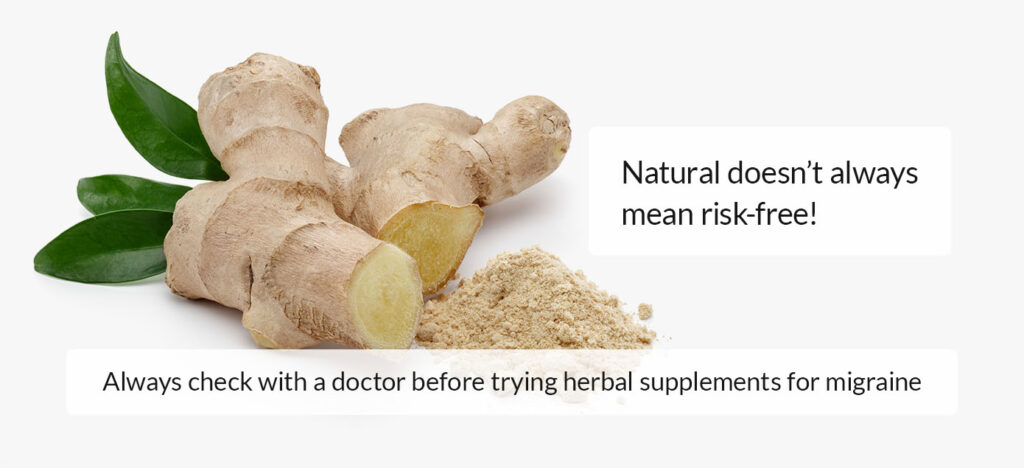
Herbal supplements can help with migraine, but their safety depends on the person and the supplement. Some can interact with medications, cause allergic reactions, or lead to uncomfortable or serious side effects. Willow bark, for example, acts like aspirin and may not be safe for people with bleeding disorders. Always check with a doctor before trying herbal supplements for migraine, especially if you take other medications or have health conditions. Natural doesn’t always mean risk-free!
Can you take herbal supplements with other migraine medications?
It depends on the herbal supplement and the migraine medication. Some herbs, like lavender, can cause drowsiness and may enhance the effects of sedatives. Other herbs may interact with triptans, beta-blockers or antidepressants used for migraine prevention.
Always check with a doctor, pharmacist or another healthcare professional before combining herbal supplements with migraine medications. Even natural remedies can have side effects or interfere with prescriptions, so it’s important to make sure they’re safe to take together.
You can explore the FDA’s consumer information on using dietary supplements for more educational resources.
Try CEFALY for migraine pain relief and prevention
While herbal remedies may offer relief for some, they’re not a one-size-fits-all solution. If you’re looking for a more targeted and innovative approach, CEFALY might be the answer. This FDA-cleared device offers drug-free migraine relief using neurostimulation, which has been clinically proven to reduce the intensity and frequency of migraine attacks.
Try CEFALY Connected today — an effective, noninvasive option that’s recommended by neurologists.










Latest Posts

“CEFALY Gave Me My Life Back”: Camille’s Search for a Drug-Free Migraine Treatment
Discouraged by her experience with medications, Camille began building a toolkit of non-pharmacologic migraine treatments. Find out what…

What Patients Need to Know About Episodic Migraine vs. Chronic Migraine
While official definitions classify episodic migraine as fewer than 15 headache days per month and chronic migraine as…